

 Facebook
 X
X
 Pinterest
 Copy Link
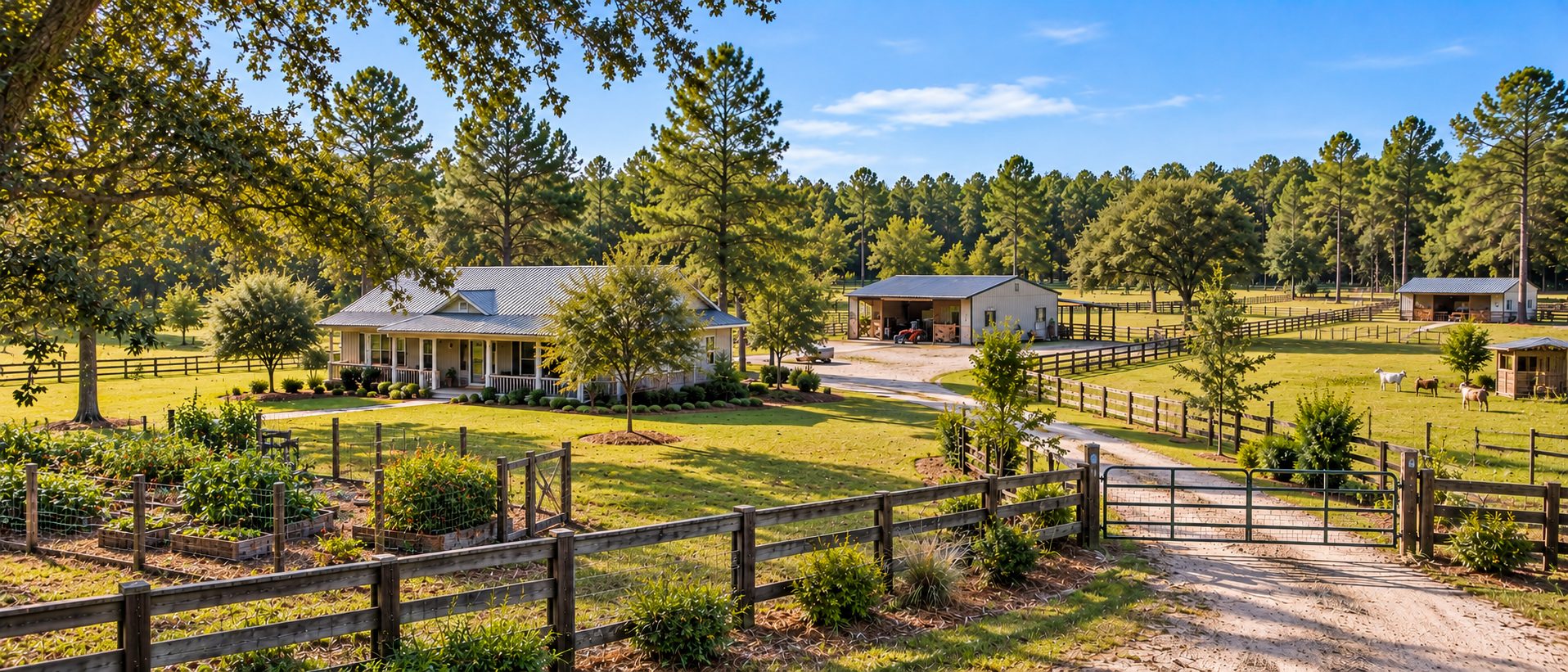
Selling country property takes more than showing off the land.
There’s something special about a home with a little land around it.
Maybe it’s the privacy. Maybe it’s the room for a garden, a workshop, or a few animals. Or maybe it’s just having enough space to sit on the porch and enjoy the quiet.
I understand why people love country property. I’ve helped folks buy and sell it around Crestview and Northwest Florida for a long time.
But when it comes time to sell, there’s something I always want homeowners to understand.
Buyers aren’t just buying the house. They’re buying everything that comes with it.
And the more clearly they understand the property, the more confidently they can make a decision.
Start With What Makes Your Property Useful
When you’re selling a home in a neighborhood, buyers can usually make some pretty straightforward comparisons.
Square footage. Bedrooms. Condition. Lot size.
Country property is different.
Two homes may have similar square footage and the same number of acres, but offer entirely different opportunities.
One may have cleared pasture and fencing. Another may be mostly wooded. One may have a workshop, while another has open space for future improvements.
That’s why I like to start with a simple question:
What can someone actually do with this property?
Buyers thinking about how much land they really need are looking for more than an acreage number. They want to understand how the land fits their plans.
Help Buyers Understand the Land
A beautiful photograph of an open field may catch someone’s attention.
But eventually, they’re going to have questions.
Where are the property boundaries?
How much land is cleared?
Are there wooded or low-lying areas?
Is the property fenced?
Are there easements or access considerations?
These are important details, and having accurate information available early can make the selling process much smoother.
I’m not suggesting sellers need to know every technical answer themselves. Some questions require a survey, county records, or a qualified professional.
But the more we can document and explain, the better.
Don’t Overlook Wells, Septic, and Utilities
If your home is outside an established subdivision, buyers may be unfamiliar with some of the systems that come with rural living.
A private well.
A septic system.
Propane.
A long driveway or private access road.
These things are perfectly normal on country property, but buyers want to know what they’re taking on.
If you’ve maintained your systems and have records available, that’s helpful information to share.
And if something needs attention, it’s better to understand that before it becomes a surprise during the transaction.
I’ve written about what buyers need to understand about rural utilities because these systems are part of the property’s everyday function and long-term ownership.
Outbuildings and Improvements Need Their Own Attention
A workshop, barn, storage building, or fenced pasture may be a real advantage.
But buyers will want to know whether those improvements are useful and in good condition.
Before listing, take a good look at:
- Fences and gates
- Barns and workshops
- Driveways and access points
- Drainage around buildings
- Exterior maintenance
- Equipment and storage areas
You don’t necessarily need to make everything look brand new.
You do want buyers to see that the property has been cared for.
And remember, not every improvement adds dollar-for-dollar value. What matters is how useful it is to the buyers most likely to be interested in your property.
Show the Whole Property, Not Just the House
This is one area where marketing country property really matters.
A traditional real estate photo gallery may do a wonderful job showing the kitchen, living room, and bedrooms.
But what about the rest of the property?
Buyers need to understand how the house sits on the land.
Where’s the driveway?
How far is the barn from the house?
How are the pastures arranged?
What’s wooded, and what’s open?
Good photography, thoughtful property descriptions, and aerial views when appropriate can help buyers understand the layout before they visit.
The goal isn’t simply to make the property look beautiful.
It’s to help the right buyer recognize what it offers.
Pricing Acreage Takes More Than Counting Acres
This is where experience makes a difference.
You can’t always take the value of a house, add a certain amount for every acre, and arrive at the right asking price.
Land varies.
Improvements vary.
Location, access, condition, usability, and buyer demand all play a role.
Even two properties on the same road can have very different values.
I’ve talked before about what holds value in Crestview homes, land, and location, and those same principles become especially important when pricing country property.
A good pricing strategy starts with understanding the property as a whole—not just the house or the acreage separately.
Think About Who Will Want to Live There
Not every acreage buyer is looking for the same thing.
Some want room for children to play.
Some want horses.
Some want a workshop or space for equipment.
Others simply want privacy and a little distance from the neighbors.
Understanding the likely buyers helps us decide which features deserve attention in the marketing.
That doesn’t mean making assumptions about who can or should live there.
It means showing the property’s features and possibilities clearly enough for buyers to decide whether it fits their needs.
My Honest Advice
If you’re thinking about selling a home with acreage, don’t start by worrying about making every inch of the property perfect.
Start by understanding what you have.
Gather your records.
Walk the property.
Take a good look at the fences, buildings, and access.
Think about the questions someone unfamiliar with the land might ask.
And work with someone who understands that selling country property requires looking beyond the house.
Final Thought
A home with acreage has more to offer than four walls and a yard.
It has space, possibilities, responsibilities, and a way of living that can be hard to capture in a listing.
The best way to sell it isn’t just to show buyers how pretty it is.
It’s to help them understand what makes it worth owning.
Janet Johnson
Where experience meets home.
