

 Facebook
 X
X
 Pinterest
 Copy Link
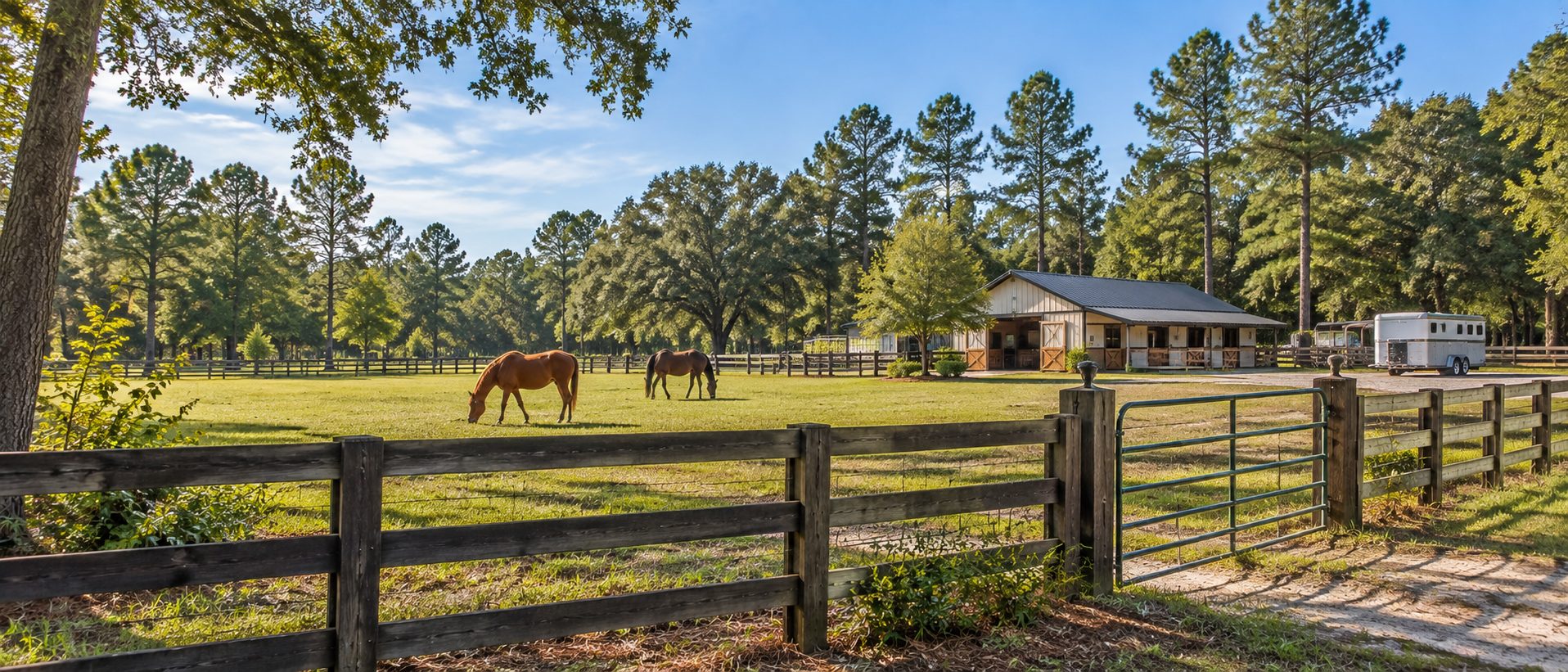
There’s something about seeing horses in a green pasture that can make a property feel right before you’ve even made it to the house.
I understand that.
Northwest Florida has some beautiful country properties, and for buyers who have horses—or hope to someday—the idea of having them right outside the back door can be hard to resist.
But a horse property needs to do more than look pretty.
The land, fencing, water, access, shelter, and layout all have to work together.
That’s why I always encourage buyers to look beyond the fence before deciding they’ve found the one.
Start With the Land, Not the Barn
A beautiful barn gets attention. But I’d rather start by looking at the property itself.
How much of the acreage is actually usable?
Is there enough open ground for what you plan to do?
How does the land drain?
Where are the wooded areas?
How is the property divided?
Those questions matter because the number of acres on the listing doesn’t necessarily tell you how those acres will function.
If you’re still deciding what size property makes sense, I recently wrote about how much land you really want to live with.
Good Fencing Is More Than a Pretty Boundary
Fencing deserves a close look on any horse property.
You want to understand:
What type of fencing is already there
Its condition
How the gates are positioned
Whether pastures can be separated
What may need repairing or replacing
A property with existing fencing may look ready to go, but repairing or reworking a fence line across several acres can become a significant project.
Look at function first. Pretty comes second.
Pay Attention to Water and Drainage
Northwest Florida gets plenty of rain. That makes drainage especially important on land used for horses.
Walk the property and look for low areas, standing water, erosion, muddy gateways, and places where runoff naturally travels.
Think about where horses will spend time during wet weather and whether there’s higher, drier ground available.
Water access matters too.
Where are the water sources in relation to the pasture, barn, and other areas you’ll use every day?
Convenience becomes important very quickly when you’re carrying buckets or running hoses.
A Barn Should Work With the Property
A barn doesn’t have to be fancy. It needs to be useful.
Look at its location in relation to:
Pastures
Water
Feed storage
Equipment
Driveways
Trailer access
The house
Sometimes a simple, well-positioned barn is much more practical than an elaborate one sitting in the wrong place.
And if the property doesn’t already have the barn you want, think carefully about where one could reasonably go.
Can You Get a Truck and Trailer In—and Back Out?
This is one of those practical details that’s easy to overlook during a showing.
A beautiful tree-lined driveway may look wonderful. But can you comfortably bring a truck and horse trailer through it? Are the gates wide enough? Is there room to turn around? And, what happens when the ground is wet?
You’ll appreciate good access every single time you use it.
That’s also why understanding access, easements, and other land considerations before buying is so important with rural property.
Look Beyond Your Own Property
What’s next door matters with horse property too.
Nearby land uses can affect how you enjoy and use your acreage.
Take a look at surrounding properties, roadways, development, drainage patterns, and anything else that could change the character or function of the land.
I’ve talked before about why the surroundings beyond your property line deserve a closer look. That’s especially true when you’re buying acreage for a specific purpose.
Think About the Work, Not Just the Lifestyle
Horse property can be a wonderful way to live.
It also comes with work.
Fences need attention.
Pastures need managing.
Barns need maintaining.
Trees come down.
Equipment needs somewhere to go.
None of that is a reason not to buy one. It’s simply part of understanding the property you’re choosing. For someone who loves the lifestyle, that work can be part of what makes the place feel like home.
My Honest Advice
When you tour a horse property, don’t spend all your time looking at the house and barn.
Walk the land.
Open the gates.
Look at the fence lines.
Pay attention to where the water goes.
Picture bringing in a trailer.
Think about where you’ll store feed, hay, tack, and equipment.
And picture yourself taking care of all of it on an ordinary day.
A property doesn’t have to be perfect. But it does need to work.
Final Thought
The best horse property isn’t necessarily the one with the prettiest barn or the most acreage. It’s the one where the land, improvements, and everyday practical details come together in a way that works for you—and for the animals depending on you.
Janet Johnson
Where experience meets home.
